 Daenah
Multilingual websites.
Multilingual websites with clear language navigation, dedicated metadata and correct hreflang — built to serve different audiences consistently and support per-language discoverability.
Built to serve every audience
Serve each audience clearly
Give every language an intentional, well-structured experience.
Keep language versions technically connected
Per-language navigation, metadata and correct hreflang.
Support per-language discoverability
Help search systems identify the right language version.
Core capabilities
People understand and trust information more easily when it is presented clearly in a language they use. A multilingual site should give each audience an intentional experience rather than duplicating one page through an unreviewed translation layer.
Per-language navigation
A clear structure and language switcher across versions.
Dedicated titles and descriptions
Metadata tuned for each language and market.
Correct hreflang
Signals the right language version to search systems.
Consistent language switching
A clean switcher and consistent structure across languages.
Locale-aware structured data
Structured data prepared per locale.
Right-to-left support when needed
Layouts that adapt to RTL languages.
Content supplied or professionally translated / reviewed
Provided by you, or prepared and reviewed for each language.
Relevant work
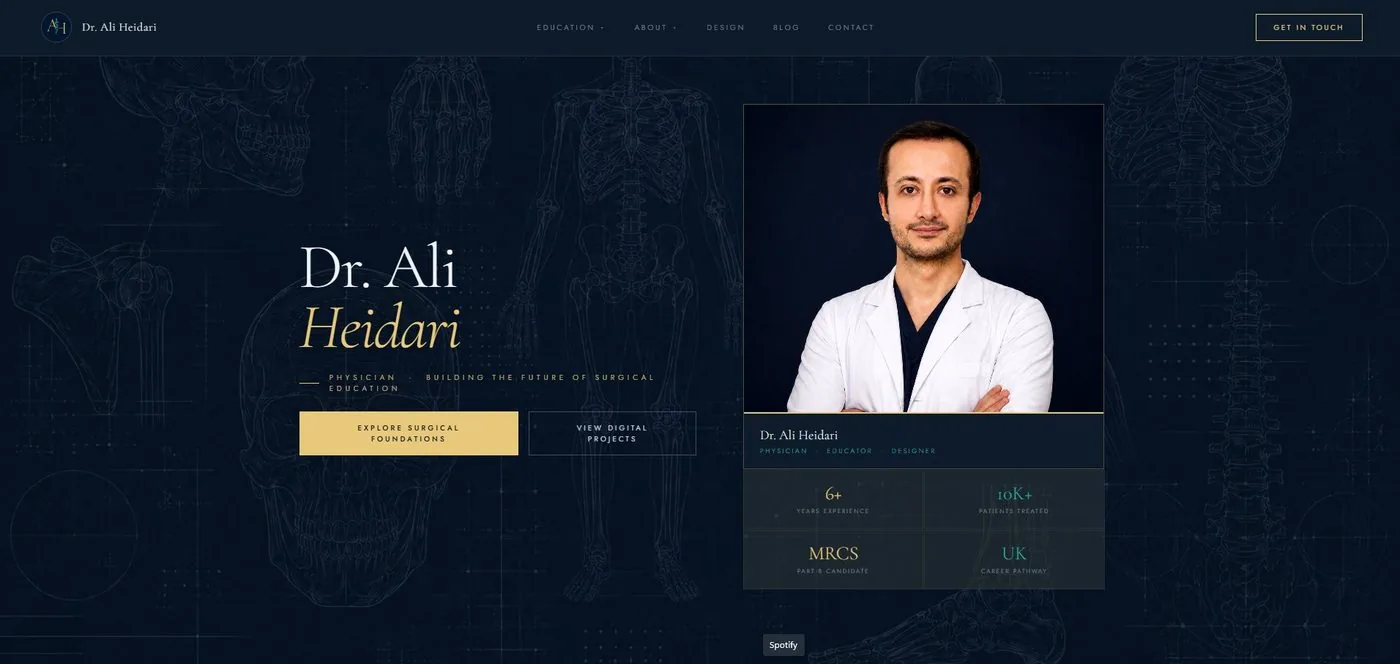
Dr. Ali Heidari
A bilingual English/Turkish website with per-language structure, navigation and metadata.
View case study →How we deliver
Every project moves from requirements to launch through the same five stages.
Discover
Understand goals, audience and constraints.
Define
Agree scope, structure and a fixed quote.
Design
Shape the interface and content hierarchy.
Build
Hand-code the front end and any platform logic.
Launch & support
Ship, verify and support after launch.
Frequently asked questions
01What does “multilingual” mean here?
Each language gets clear navigation, dedicated metadata, and correct hreflang with per-language SEO — not a translate plugin bolted on. Content may be client-supplied or professionally translated.
02Which languages can you build in?
English and Turkish as standard, plus other languages on request.
03Why not just use Google Translate?
Automatic translation without professional review can introduce inaccuracies, awkward wording and inconsistent terminology. The important difference is not the tool alone, but whether each language version is reviewed, structured correctly and maintained.
04Will each language be ranked independently in search?
Dedicated URLs, metadata and hreflang help search systems identify the appropriate language version. They support discoverability but do not guarantee ranking.
05Is this useful for health tourism?
It can help. Clear multilingual structure and per-language metadata make content easier for international patients to find and understand in their own language.
06How much does a multilingual site cost?
It starts at the website tier (around $2,000) and depends on the number of languages and pages. See the pricing page.